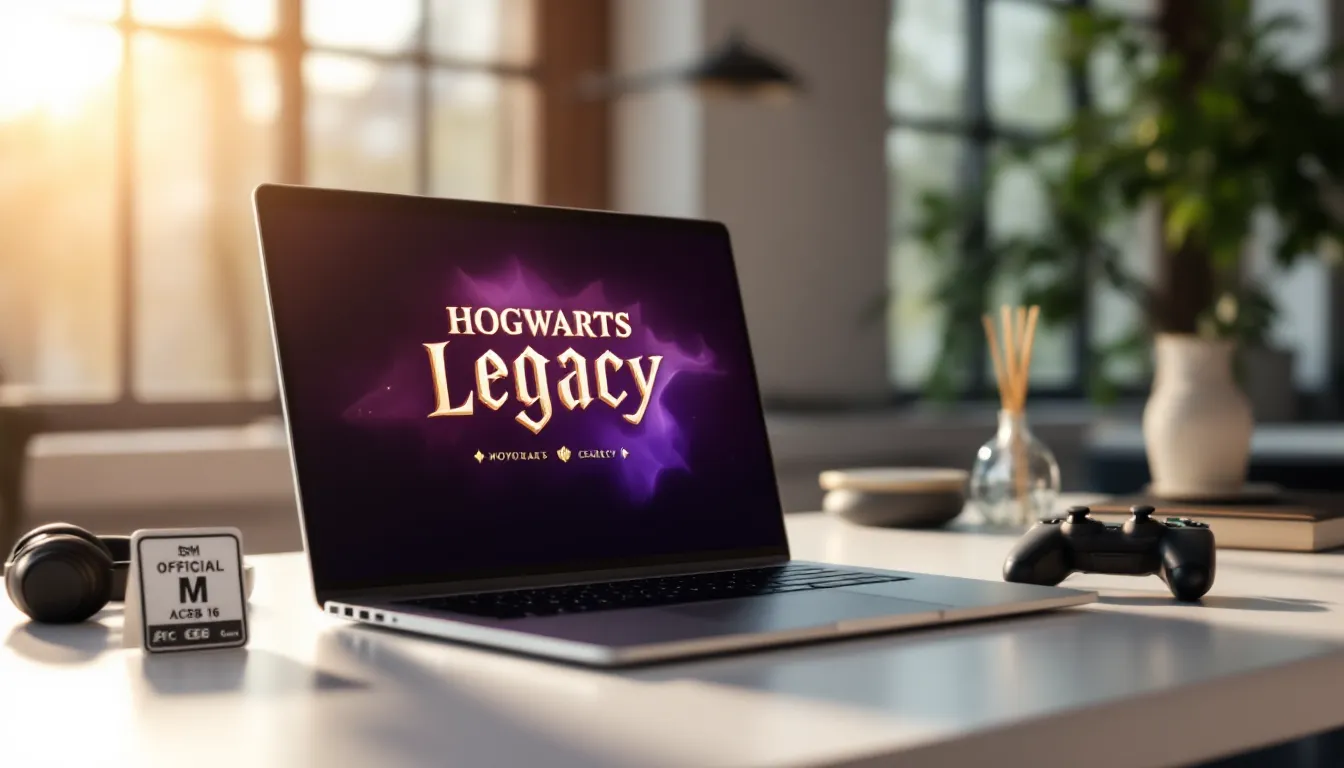
So your kid wants to play Hogwarts Legacy, or maybe you’re thinking about diving into the wizarding world yourself. Before you boot it up, there’s one thing worth understanding: what’s actually in this game in terms of content? The Hogwarts Legacy age rating isn’t just a number, it reflects specific reasons why the ESRB and other rating boards slapped that M (Mature) label on it. Whether you’re a parent trying to make an informed call or a gamer wondering what to expect, knowing exactly what the rating means and what content triggered it can help you decide if it’s the right fit. This guide breaks down the official ratings across regions, explains what makes the game suitable for mature audiences, and covers practical ways to manage playtime with controls and settings.
Table of Contents
ToggleKey Takeaways
- Hogwarts Legacy carries an ESRB M (Mature 17+) rating in North America due to spell-based combat violence, dark thematic elements, and character deaths that exceed the tone of the film series.
- The game features darker narrative elements than the movies—including morally complex storylines about dark magic, slavery, and character mortality—making the Hogwarts Legacy age rating a significant jump from PG/PG-13 films.
- Parents can enforce content restrictions through platform-level parental controls on Nintendo Switch, PlayStation 5, and Xbox Series X/S, though the game itself offers no in-game content filters for mature themes.
- A mature 14–15-year-old may handle the game appropriately depending on individual sensitivity, while the ESRB officially recommends it for ages 17 and older.
- Accessibility options allow players to adjust difficulty, visual effects, and subtitle settings to reduce overwhelming moments, though these don’t eliminate core story elements or violence.
Official Age Rating Breakdown Across Regions
ESRB Rating and What It Means
In North America, Hogwarts Legacy carries an ESRB M (Mature 17+) rating, meaning it’s officially recommended for players 17 years and older. This doesn’t mean younger players can’t technically play it, but the ESRB has determined the content warrants that age recommendation. The rating applies across PC, PlayStation 5, Xbox Series X/S, and Nintendo Switch versions.
The M rating specifically accounts for blood, combat violence, and mild language. The ESRB descriptors don’t sugarcoat it: expect combat sequences involving wands, spells, and magical creatures. The violence itself isn’t gratuitously graphic, it’s contextual to the Harry Potter universe, but it’s more intense than the films, which typically sit in the PG or PG-13 range.
PEGI Rating in Europe
European players see a PEGI 16 classification, which is actually one step below the North American rating. This might seem contradictory, but PEGI and ESRB weight content categories differently. PEGI 16 indicates the game contains violence and material that requires some maturity, but Europe’s standards for magical combat differ slightly from the ESRB’s interpretation.
It’s worth noting that while PEGI 16 is the official classification, parental judgment still matters. Some younger teenagers may find certain story elements or boss encounters more intense than others, depending on sensitivity to darker themes.
Other Regional Classifications
Outside North America and Europe, the game has been classified by other bodies:
- Australia (ACB): Rated M (Mature Audiences 15+), similar in intent to PEGI 16
- Japan (CERO): Rated C (Ages 15 and up), focusing on the same violence concerns
- South Korea (GRB): Rated 15, aligning with European standards
These classifications reflect regional attitudes toward fantasy violence and magical content. Generally, they cluster between ages 15–17, with the North American M rating being the most restrictive.
What Makes Hogwarts Legacy Rated for Mature Audiences
Violence and Combat Mechanics
Combat in Hogwarts Legacy is spell-based and fantastical, but it’s unquestionably more visceral than the films. Players engage in duels against dark wizards, dark creatures, and goblin armies using offensive spells. When hit with certain spells, enemies react with visible impact, they get knocked back, stun effects trigger, and defeated enemies disappear or fall.
The signature violent moments come from Avada Kedavra (the killing curse) and Crucio (the torture curse). Both produce brief flash effects and enemy elimination. While not realistic gore, they’re notably darker than what appears in any of the theatrical films. Other spells like Diffindo (cutting curse) and Confringo (explosive curse) show impact effects that contribute to the violence descriptor.
One specific moment that raised eyebrows: execution-style takedowns. When you’ve weakened an enemy below a certain health threshold, you can perform a finishing move. These aren’t graphically gory, but they’re intentional kill animations that set the tone differently than, say, a simple health bar depletion.
For combat context, Hogwarts Legacy Combat Spells offers deeper mechanics breakdown if you want to understand exactly what spells deal what damage and how violence plays into core gameplay.
Darker Thematic Elements
Beyond the mechanics, the story itself leans into mature territory. Hogwarts Legacy is set in the 1800s, roughly a century before Harry Potter’s timeline, and deals with goblin rebellion, dark magic practitioners, and consequences that feel more grounded than the films.
Key thematic concerns:
- Death and Loss: Characters you care about die. Some are graphic in their circumstances: others are heavily implied.
- Dark Magic: The game doesn’t shy away from exploring why dark spells appeal to people. You’re tempted (optionally) to use Unforgivable Curses, and the game shows the moral weight of that choice.
- Slavery and Oppression: A major storyline involves house-elf liberation and goblin inequality, presented with genuine moral complexity rather than simplified good-vs-evil.
- Corruption and Betrayal: Trust is broken: allies turn on you: the political undercurrents in the wizarding world are messy.
These themes aren’t gratuitous, they’re intrinsic to the narrative, but they’re significantly darker than the source material films, especially the early installments.
Language and Mild Profanity
While Hogwarts Legacy uses colorful language, it’s not heavy profanity. The ESRB rating cites “mild language,” and that’s accurate. You’ll hear the occasional damn or hell in dialogue, and mild insults between characters. It’s nothing that would shock an M-rated game player, but it’s present enough to note.
The language is sparse rather than pervasive. NPCs don’t constantly swear, and dialogue feels contextually appropriate to character moments rather than gratuitous. If your concern is protecting younger players from excessive profanity, this is genuinely one of the lighter aspects of the M rating.
Is Hogwarts Legacy Appropriate for Younger Gamers?
Content That May Concern Parents
That M rating isn’t arbitrary, and parents should understand what warrants it. Here’s what genuinely stands out:
Death Sequences: Multiple named characters die during the campaign. Some deaths are quick: others are slow and emotionally weighted. The game doesn’t cut away, you witness them.
Dark Magic Temptation: The Unforgivable Curses aren’t gatekept by age. Even younger players can learn and cast them. While the game encourages alternative playstyles, there’s no mechanical restriction stopping a 10-year-old from using Avada Kedavra if they’re skilled enough.
Enemy Types: You fight dark wizards, including ones modeled after or inspired by darker figures. While not graphically explicit, the context, wizards practicing dark magic with intent to harm, carries weight that younger kids might internalize differently.
Psychological Tension: Certain story moments create genuine unease. There are scenes in dark environments with tense music and sudden enemy encounters that could unsettle younger players, even if they’re not explicitly violent.
Romantic and Mature Undertones: While Hogwarts Legacy doesn’t include explicit sexual content, some companion interactions hint at romantic tension and mature relationships. Nothing objectionable for older teens, but worth noting if you’re considering it for very young players.
The honest take? A mature 14 or 15-year-old might handle it fine. Some kids that age have been playing darker content. But an 8 or 10-year-old? That’s a harder sell. Around 13–14 is where individual maturity matters more than the official rating.
Accessibility Options and Controls
Hogwarts Legacy includes tools that let parents and players customize their experience. These don’t eliminate mature content entirely, but they can reduce certain uncomfortable elements.
What You Can Control:
- Difficulty Settings: Adjusting combat difficulty doesn’t remove violence, but it reduces the pressure and pacing of encounters, potentially making tense moments less overwhelming.
- Puzzle Difficulty: Optional accessibility settings let you lower or disable puzzle difficulty, shortening exposure to tense exploration segments.
- Visual Effects: While there’s no gore-off toggle, you can adjust motion blur and other visual settings that might reduce the impact of combat effects.
- Screen Reader Support (PC/Console): Text-heavy sections can be navigated with accessibility tools, which might benefit some players with visual processing concerns.
- Subtitle Customization: You can enlarge subtitles and adjust text settings, letting you control the pacing of dialogue-heavy story beats.
Worth noting: there’s no content filter that strips out story elements or dark themes. You can’t “remove” Avada Kedavra or turn off character deaths. These are narrative-core features. Accessibility here focuses on mechanical and sensory adjustments, not content filtering.
Comparing Hogwarts Legacy to Other Popular Gaming Titles
How It Stacks Up Against Similar Action RPGs
Where does Hogwarts Legacy fall in the maturity spectrum among comparable games? Let’s be specific:
vs. Elden Ring (M for Mature 17+):
Elden Ring and Hogwarts Legacy both carry M ratings, but for different reasons. Elden Ring focuses on intense violence, blood, and visceral combat, it’s thematically darker in presentation. Hogwarts Legacy’s M rating leans more on narrative elements and contextual violence without the graphic gore. If your concern is visual intensity, Elden Ring is harsher. Story-wise? Both are emotionally heavy.
vs. The Witcher 3 (M for Mature 17+):
This is closer in spirit. Both are story-heavy action RPGs with morally gray choices and fantasy violence. Witcher 3 includes blood during combat and occasional nudity in witcher-contracts storylines. Hogwarts Legacy matches it on violence intensity but avoids sexual content entirely. Narrative maturity is comparable, you’re making difficult choices with consequences.
vs. Skyrim (M for Mature 17+):
Skyrim’s M rating comes from blood and violence in a medieval fantasy setting. Hogwarts Legacy has similar violence levels (maybe slightly less graphically presented), but with more intense story moments. Both allow morally ambiguous playstyles. If someone’s played Skyrim comfortably, Hogwarts Legacy shouldn’t shock them.
vs. Fortnite (T for Teen 13+):
This is a stark contrast. Fortnite’s T rating reflects cartoonish violence in a multiplayer shooter. Hogwarts Legacy is single-player, story-driven, and significantly darker thematically. Not in the same ballpark maturity-wise.
vs. Persona 5 (M for Mature 17+):
Persona 5’s M rating comes from suggestive themes, occasional violence, and blood. Hogwarts Legacy has darker narrative beats but avoids the suggestive content. Violence is comparable. If someone’s comfortable with Persona 5, Hogwarts Legacy is a safe bet.
Franchise Comparison: Game vs. Films
Here’s where the rating makes most sense contextually. The films span PG to PG-13, primarily. Hogwarts Legacy is rated M. That’s a jump.
Why the gap?
Films have runtime constraints and studio oversight balancing family accessibility with storytelling. Hogwarts Legacy is a 25–40 hour RPG with no need to be family-friendly. It can spend time on morally complex villains, character deaths, and darker magical concepts without cutting away.
You won’t see the same visceral violence in Chamber of Secrets or Prisoner of Azkaban that you’ll witness here. When a character dies in the game, the camera doesn’t pan away, you see the consequence. When dark magic is used, the game shows it unfiltered by a rating board’s film-safety standards.
That said, it’s still recognizably Harry Potter. It respects the source material’s tone while not restricting itself to kid-friendly boundaries. Think of it like the difference between a YA book and a darker fantasy novel set in the same universe, both valid, different audiences.
Platform Differences and Rating Considerations
PC, Console, and Switch Versions
Hogwarts Legacy released across multiple platforms: PC (Steam, Epic Games Store), PlayStation 5, Xbox Series X/S, and Nintendo Switch. All versions carry the same age rating (ESRB M 17+), but there are technical and presentation differences worth noting if you’re choosing where to play.
PC Version:
Uncompressed graphics, highest visual fidelity, most stable performance. The violence and dark scenes are presented at maximum visual clarity. If you’re concerned about visual intensity, this is where it’s most prominent.
PlayStation 5 and Xbox Series X/S:
Console versions are optimized for stability and match PC quality closely. Ray-tracing, high frame rates, and visual consistency are strong across both. From a maturity standpoint, presentation is equivalent to PC.
Nintendo Switch Version:
Released in November 2024, the Switch version was the most compromised technically, with lower resolution and graphical settings to fit the hardware. Crucially, the content itself is unchanged, same story, same dark moments, same rating. But the visual presentation is downscaled. For some parents, a less visually intense presentation might feel slightly less impactful, though thematically it’s identical.
The age rating applies universally across platforms. There’s no “kid-friendly” Switch version or “adult” PC version, content parity is maintained per publisher requirements. You’re choosing based on hardware preference, not content filtering.
Parental Controls and Safety Features
If you’re a parent buying this for a teen or setting it up on a shared console, understanding platform-level parental controls is important.
Nintendo Switch Parental Controls:
The Switch has robust parental control software. You can restrict game play based on content rating (restricting M-rated games outright), set playtime limits, monitor play history, and restrict online features. If you’re buying the Switch version specifically for a younger family member, you can enforce these restrictions at the system level, the game itself can’t be played if parental controls block M-rated content.
PlayStation 5 and Xbox Parental Controls:
Both PS5 and Xbox Series X/S offer parental controls that restrict games by rating. You can set content restrictions (block M-rated games), manage screen time, and oversee online interactions. These are account-level, so you’d set them on the primary account and restrict secondary accounts from playing M-rated titles.
PC (Steam, Epic Games):
Steam and Epic have minimal built-in parental controls for rating restrictions, they’re more focused on purchase authorization and account limits. Windows 10/11 itself has parental controls, but they’re not specifically game-rating based. If you’re concerned about a younger player on a PC, you’d need to manage it through account permissions or third-party tools.
In-Game Settings:
The game itself doesn’t have a content filter. You can’t toggle off dark themes, violence, or story elements. What you can customize are accessibility options: difficulty, subtitle size, visual effects intensity. These can make the experience less overwhelming but don’t remove mature content.
For families, the practical approach: use platform-level parental controls to manage who can access the game, then make your own call on whether your teen’s maturity level aligns with the content. Don’t rely on the game to self-filter.
Frequently Asked Questions About the Rating
Can a 12-year-old play Hogwarts Legacy?
Technically yes, there’s no digital lock preventing younger players from playing. Practically, the ESRB recommends against it, and most parents find the dark story elements inappropriate for that age. Around 14–15 with demonstrated maturity is more reasonable, though it varies by kid.
Is there sexual content in Hogwarts Legacy?
No explicit sexual content. There are some romantic undertones and companion relationships that hint at maturity, but nothing graphic or inappropriate. This isn’t why it’s rated M.
How does Hogwarts Legacy compare to GameSpot reviews of other recent fantasy RPGs?
If you want detailed critical breakdowns comparing Hogwarts Legacy to contemporary titles, professional reviews evaluate story intensity, violence presentation, and age-appropriateness in context. Most critics acknowledge the darker tone relative to the films but note that the M rating is justified and fairly applied.
Will the rating change in the future?
Rating boards review content, but Hogwarts Legacy’s M rating is unlikely to change, it’s based on inherent story elements that aren’t patchable. Balance changes or new content won’t alter the fundamental rating.
Is the rating different if I buy a physical copy vs. digital?
No. The game is the same regardless of distribution method. The rating applies to the software itself, not the packaging.
Can parents monitor playtime effectively?
Yes, through console parental controls and platform tracking. Most systems let you see play history and set time limits. The game itself doesn’t report to parents, but your console can.
Why is the North American rating (M) higher than European (PEGI 16)?
Rating boards weight content categories differently. The ESRB views combat violence and dark themes slightly more conservatively than PEGI, resulting in different age tiers. Both are accurate to their regional standards.
Are there content warnings within the game itself?
The game doesn’t display content warnings. It launches into the story without disclaimer. Some players appreciated the directness: others wished there were built-in chapter warnings before major story moments.
Conclusion
Hogwarts Legacy’s M rating reflects legitimate maturity concerns: spell-based violence, dark thematic elements, character deaths, and exploration of morally gray choices. It’s not the films, it’s a story-driven RPG that respects the source material while pushing into territory the movies never approached.
For parents, the rating is informative, not a hard gate. A mature 14-year-old might handle it: a sensitive 17-year-old might find certain moments uncomfortable. For gamers, understanding what triggered the M rating helps you gauge if the content aligns with your preferences.
Platforms handle the content identically, though presentation varies slightly. Parental controls exist at the system level, not within the game itself. And if you decide to immerse, accessibility options let you adjust difficulty and visual intensity, though not narrative elements.
The bottom line: Hogwarts Legacy earns its rating. Whether it’s right for you or someone in your care depends on individual maturity, not the number assigned by a rating board. Make your call based on what you know about the player, not just the letter on the box. And if you’re diving into the gameplay mechanics, whether it’s Hogwarts Legacy Combat Gear or understanding Hogwarts Legacy Characters and their story arcs, remember that context matters as much as the combat itself. The M rating exists because the full experience is mature, and that extends to every layer of the game.